


Bellevue Botanical Garden
A free 53-acre public botanical garden in Wilburton with the celebrated Perennial Border, Yao Japanese Garden, Ravine Experience suspension bridge, and the annual Garden d'Lights holiday show.
4 photos · swipe to browse
4 photos · click any image to enlarge
Why you'll love it
An editor's take
Some public gardens impress you with scale. Bellevue Botanical Garden does something rarer: it earns your attention slowly. The 53-acre property is stitched together from a dozen distinct gardens — a perennial border that horticulturists travel across the country to see, a Japanese garden built by a sister-city artisan from Yao, a ravine you cross on a suspension bridge, a native woodland where the traffic on I-405 disappears within a minute of walking in.
What sets it apart is generosity. The garden is entirely free. It is open every day, from dawn until dusk. The plantings are designed to reveal something different every three or four weeks, so a visit in April, July, and October feels like three different places. In December, half a million lights transform the same paths into one of the largest holiday displays in the Pacific Northwest.
If you have one afternoon in Bellevue and you want to understand why locals love this city, come here first. This is the closest thing the Eastside has to a signature public space.
Quick facts
At a glance
- Neighborhood
- Wilburton
- Phone
- +1-425-452-2750
- Website
- bellevuebotanical.org
- Hours
- Daily, dawn to dusk
- Price
- Free (Garden d'Lights ticketed in December)
- Parking
- Free on-site lot; overflow at Wilburton Hill Park across Main St
- Accessibility
- Main paths paved and ADA accessible; Ravine bridge and some woodland trails have grades and stairs
- Family friendly
- Yes — stroller-friendly main loop and a dedicated children's garden area
- Pet friendly
- Service animals only — pet dogs are not permitted
- Visit duration
- 60-120 minutes for the main gardens; add 30-45 for the Ravine Experience
- Best season
- Late spring through early fall; December for Garden d'Lights
Highlights
What makes it special
- Perennial Border — a 17,000-square-foot demonstration garden internationally regarded as one of the finest of its kind in North America
- Yao Japanese Garden — a formal strolling garden gifted by Bellevue's sister city of Yao, Japan
- Ravine Experience — a 150-foot pedestrian suspension bridge over a fern-filled ravine, connecting the upper garden to native woodland
- Rock Garden and Alpine Garden — compact plantings that showcase Pacific Northwest and alpine species
- Waterwise Garden — practical demonstration of drought-tolerant landscaping suited to Puget Sound summers
- Native Discovery Garden — wetland boardwalk and native plant interpretation designed for children and families
- Fuchsia and Dahlia Gardens — peak color from July through the first frost
- Garden d'Lights (late November to early January) — 550,000 hand-strung lights sculpted into flowers, animals, and water features
- Trillium Store and Visitor Center with rotating art exhibits and a small horticultural library
- Free admission year-round; free on-site parking; no reservations required for daytime visits
What you'll experience
The visit, in detail
Park in the free lot off Main Street. The Aaron Education Center at the entrance is where every visit should start — pick up a paper map (still the best way to navigate), check the current-blooms board, and use the restrooms before you head out.
From the plaza, the Perennial Border is a one-minute walk. Come here first. Even in winter it is beautifully composed; from May through October it is one of the great public plantings in the country. Take the outer path counter-clockwise so the border reveals itself layer by layer, then double back on the inner path to see it from the reverse angle.
Follow the paved main loop south. Within a few minutes you reach the Yao Japanese Garden — a gate, a small pond, a stand of Japanese maples, a tea-house viewing pavilion. This is the quietest corner of the property. Sit on the bench for a few minutes before moving on. Most visitors do not.
Continue toward the Rock Garden, Alpine Garden, and Waterwise Garden, all clustered on the sunny southwestern slope. The Fuchsia and Dahlia collections sit just below, spectacular from midsummer through October.
The Ravine Experience is a short but meaningful detour. A gravel trail drops off the main loop into second-growth forest, crosses a 150-foot suspension bridge over a fern-lined ravine, and returns via a boardwalk through wetland. Allow 30 to 45 minutes and wear real shoes; there are stairs and moderate grades.
Loop back past the Native Discovery Garden — its boardwalk over shallow wetland is a favorite with children — and finish at the Trillium Store, where the plant sales are seasonal and genuinely well-curated.
Most visitors spend 60 to 90 minutes. Add 45 for the Ravine, another 30 for coffee on the Visitor Center patio, and a full afternoon is easy.
Insider notes
BellevueExplorer local tips
Pair the garden with lunch in downtown Bellevue
The garden is a five-minute drive from downtown Bellevue, but there are no food vendors on-site. Come in the morning, then head west for lunch at Bake's Place, Din Tai Fung at Lincoln Square, or a quiet coffee at Fonté. It makes a natural half-day itinerary.
Time your visit to the Trillium Store plant sale
The seasonal plant sales at the Trillium Store are unusually well-curated for a public garden gift shop — many selections come from the garden's own propagation or from small regional nurseries you cannot easily buy from directly. Check the events calendar before you go if you are a gardener.
Buy Garden d'Lights tickets at least a week ahead
Weekends sell out. Weeknights are the better visit anyway — shorter lines, slower pace through the display, and the on-site lot actually has room. Aim for the first entry slot at 4:30pm to catch the sky still transitioning to blue hour behind the lights.
The Ravine is worth wearing the right shoes for
Most first-time visitors skip the Ravine Experience because they came dressed for a paved loop. Wear real shoes, add forty minutes, and you get a suspension bridge, a fern-lined gorge, and the sense that Bellevue disappeared. It is the single most under-visited part of the property.
Do the Perennial Border twice, in opposite directions
This is the trick horticulturists use. Walk the outer path counter-clockwise, then double back on the inner path. The composition changes completely from the reverse angle, and you will see plant combinations you missed the first time.
Arrive before 10am on a weekday if you can
The garden feels twice its size when the paths are empty. Weekday mornings before 10am are the quietest window of the entire week — soft light on the Perennial Border, birds louder than traffic, and often no one else in the Yao Japanese Garden.
Best time
When to visit
September and October may be the connoisseur's favorite. Dahlia colors deepen, Japanese maples turn scarlet in the Yao Garden, mornings bring fog off the ravine, and crowds thin dramatically after Labor Day.
April through May is when the garden wakes up. Rhododendrons, azaleas, and dogwoods lead into the first flush of the Perennial Border. Cool mornings, unpredictable rain, and reliably long stretches of sun by late May.
June through August is peak season. The Perennial Border is spectacular, the Fuchsia and Dahlia collections come into their own, and the shaded Ravine Experience is a welcome cool corridor on hot afternoons.
Late November through early January is Garden d'Lights season — plan for it as a separate visit with timed tickets. January through March is the garden's quietest chapter: witch hazels bloom, evergreen structure shows, and you will nearly have the place to yourself.
The garden closes at dusk, but the last hour before sunset is exceptional for photography and for the way the light rakes across the border planting. In December the garden reopens at 4:30pm for Garden d'Lights.
Weekdays before 10am are the quietest window of the entire week. Light is soft, birdsong is loud, the Perennial Border is at its photographic best, and you will often have the Yao Japanese Garden entirely to yourself.
Expect a lively but never crowded feel from noon to 4pm. Weekends bring families to the Native Discovery Garden and photographers to the Perennial Border. Parking can fill on peak summer weekends between 11am and 2pm — arrive earlier or park at Wilburton Hill Park across Main St.
Photography
Photo guide
- Best locations
- The southwest overlook above the Perennial Border for a sweeping wide shot; the arched footbridge in the Yao Japanese Garden for a classic vertical; midway along the Ravine Experience suspension bridge for a scale-of-forest shot; the boardwalk in the Native Discovery Garden for reflective wetland compositions.
- Golden hour
- The final hour before sunset is the single best window of the day. Late light rakes across the Perennial Border and lifts the reds and coppers in the Japanese maples of the Yao Garden.
- Drone
- Not allowed
- Instagram spots
- The Perennial Border in July at head-height; the Yao Japanese Garden bridge with autumn maples; the Ravine Experience suspension bridge; the Fuchsia Garden in August at eye level.
Accessibility
Getting around
- Wheelchair access
- The main paved loop connecting the Visitor Center, Perennial Border, Yao Japanese Garden, Rock Garden, and Native Discovery Garden is fully wheelchair accessible with gentle grades.
- Restrooms
- ADA-compliant restrooms in the Aaron Education Center and near the Trillium Store.
- Parking
- Designated ADA parking spaces near the Visitor Center entrance; the main lot is paved and level.
- Stroller friendly
- Excellent on the main paved loop. The Ravine Experience trail is not stroller-friendly — it includes stairs and unpaved sections.
Nearby
What's around you
Arts & Culture nearby
Browse all arts & culture in Bellevue →
Garden d'Lights
Holiday light show at Bellevue Botanical Garden.
Wilburton
Meydenbauer Center Theatre
Meydenbauer Center's 410-seat proscenium theatre in Downtown Bellevue.
Downtown
Bellwether Public Sculpture
Citywide outdoor sculpture biennial.
Downtown
Gunnar Nordstrom Gallery
Long-running contemporary art gallery.
Downtown
Parks & Trails nearby
Browse all parks & trails in Bellevue →
Wilburton Hill Park
4.6Hilltop park with sports fields, gardens, and city views.
Wilburton

Meydenbauer Bay Park
4.7Bellevue's downtown waterfront: a swim beach, a pier, and kayak rentals ten minutes below Old Bellevue.
Old Bellevue

Mercer Slough Nature Park
4.7A 320-acre freshwater wetland preserve in the heart of Bellevue with seven miles of trails, boardwalks over open water, a working blueberry farm, and the Environmental Education Center run in partnership with Pacific Science Center.
Newport

Lake Hills Greenbelt
4.6Wetland greenway with a working farm and trails.
Lake Hills
Shopping nearby
Browse all shopping in Bellevue →
REI Bellevue
Eastside REI Co-op store with outdoor gear, apparel, and a full-service bike shop.

Whole Foods Market Bellevue
Downtown flagship Whole Foods with hot bar, sushi, and rooftop seating.
Wilburton

Uwajimaya Bellevue
Pacific Northwest's premier Asian grocery and gift store.
Wilburton

The Shops at The Bravern
Bellevue's luxury shopping destination featuring Neiman Marcus, Hermès, and Gucci.
Downtown
Hotels nearby
Browse all hotels in Bellevue →Bellevue Club Hotel
An independent 66-room hotel attached to the Bellevue Club — a 200,000-square-foot athletic and wellness campus with indoor and outdoor pools, a full-service spa, and four dining venues, at the south edge of downtown Bellevue.
Downtown
Residence Inn by Marriott Bellevue Downtown
All-suite extended-stay with kitchens and breakfast.
Downtown
Hotel 116, A Coast Hotel
Boutique-feel hotel just east of downtown.
Wilburton
Hilton Bellevue
Full-service Hilton with Basil's Kitchen restaurant.
Downtown
Local Businesses nearby
Browse all local businesses in Bellevue →
Ishii Motor Industries Auto Repair
Independent Bellevue auto repair shop on 116th Ave NE — a locally-owned alternative to dealership service, walking distance from downtown Bellevue.
Wilburton
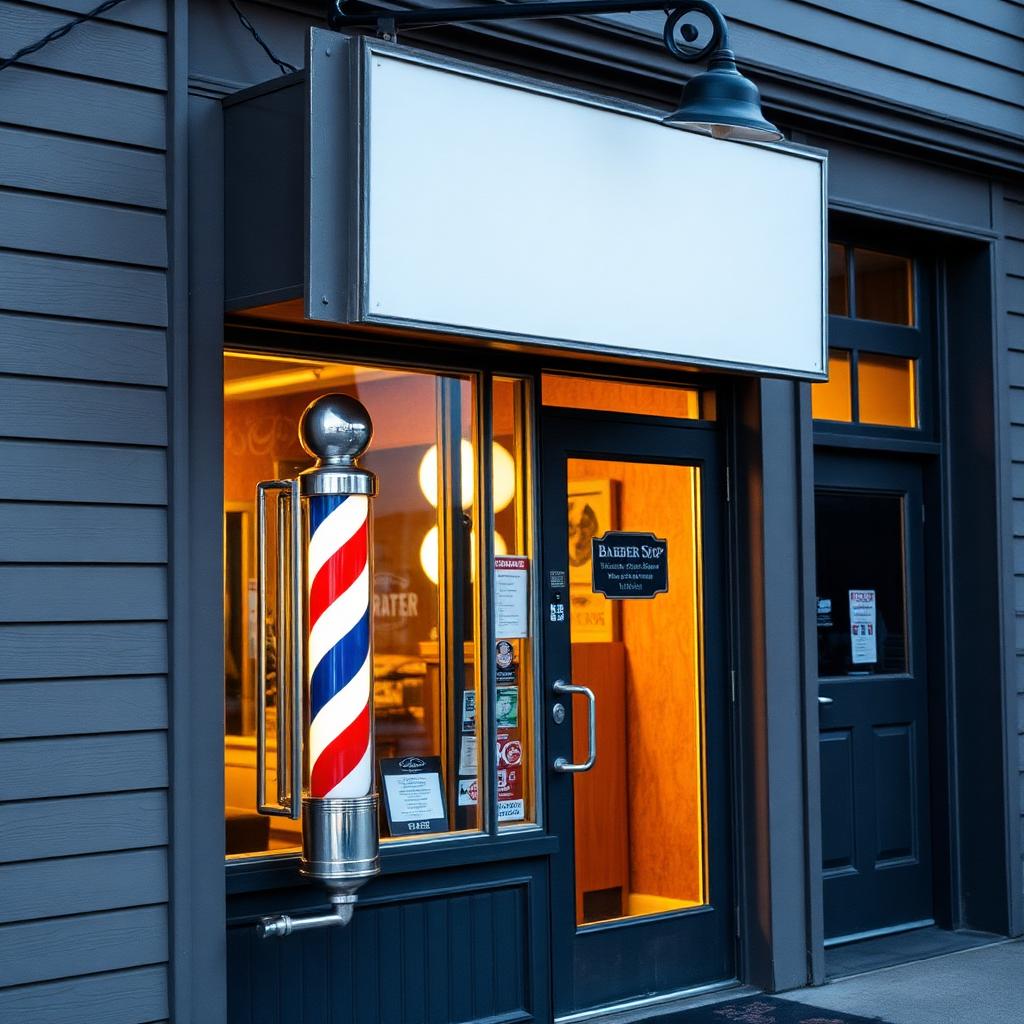
Bel-Red Barbers
4.6Bellevue's longest-running barber shop — walk-ins only, seven days a week, in continuous operation on the Eastside since 1959.
Bridle Trails
Things to Do nearby
Browse all things to do in Bellevue →
Meydenbauer Center
4.4Bellevue's premier convention, conference, and performing arts venue — 36,000 square feet of column-free ballroom, a 410-seat theatre, and a full block of meeting space steps from light rail.
Downtown

Lucky Strike Bellevue
4.3Upscale bowling, billiards, and craft cocktails.
Downtown
Restaurants nearby
Browse all restaurants in Bellevue →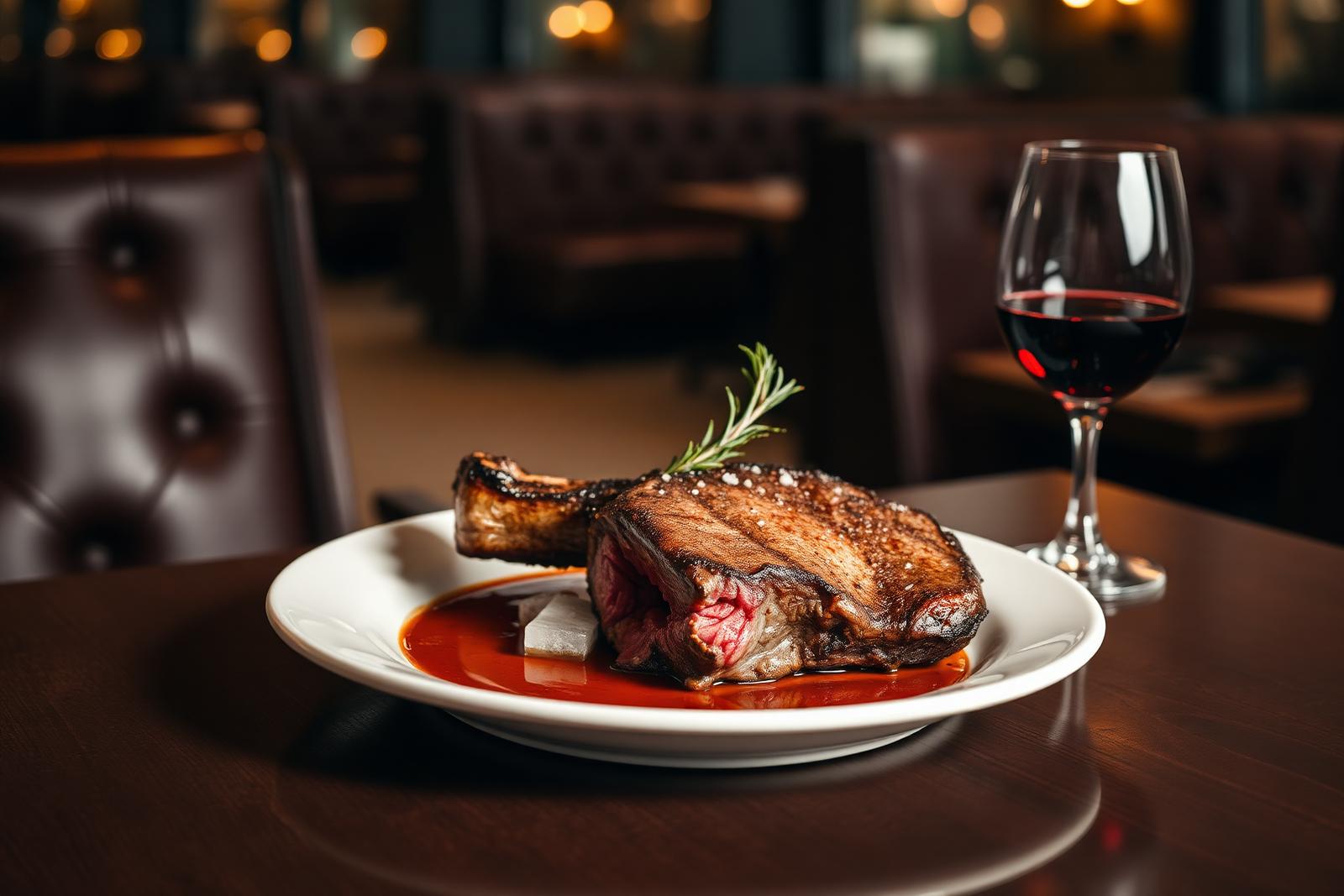
John Howie Steak
4.7The Bravern's flagship steakhouse — a serious dry-aging program, one of the deepest wine lists on the Eastside, and the Downtown Bellevue business-dinner room chef John Howie built.
Downtown

El Gaucho
4.6Pacific Northwest classic steakhouse — tableside service, prime beef, and the tuxedoed room that has defined Bellevue special-occasion dining for a generation.
Downtown

Daniel's Broiler
4.6Downtown Bellevue's classic steakhouse on the 21st floor of Bellevue Place — USDA Prime beef, a serious wine list, and the piano bar that has anchored Bellevue business dinners for decades.
Downtown

Facing East
4.5Bellevue's Taiwanese landmark since 2006 — hand-crafted beef noodle soup and xiao chi small plates, now served takeout and delivery from Bel-Red Road.
Nightlife nearby
Browse all nightlife in Bellevue →Lake Washington Cellars
Local winery tasting room.
Downtown

Bellevue Brewing Company
Family-friendly brewery and restaurant.
Civility & Unrest
Cocktail bar inside W Bellevue with creative drinks.
Downtown

Cypress Lounge & Wine Bar
Refined wine bar inside The Westin Bellevue.
Downtown
Coffee Shops nearby
Browse all coffee shops in Bellevue →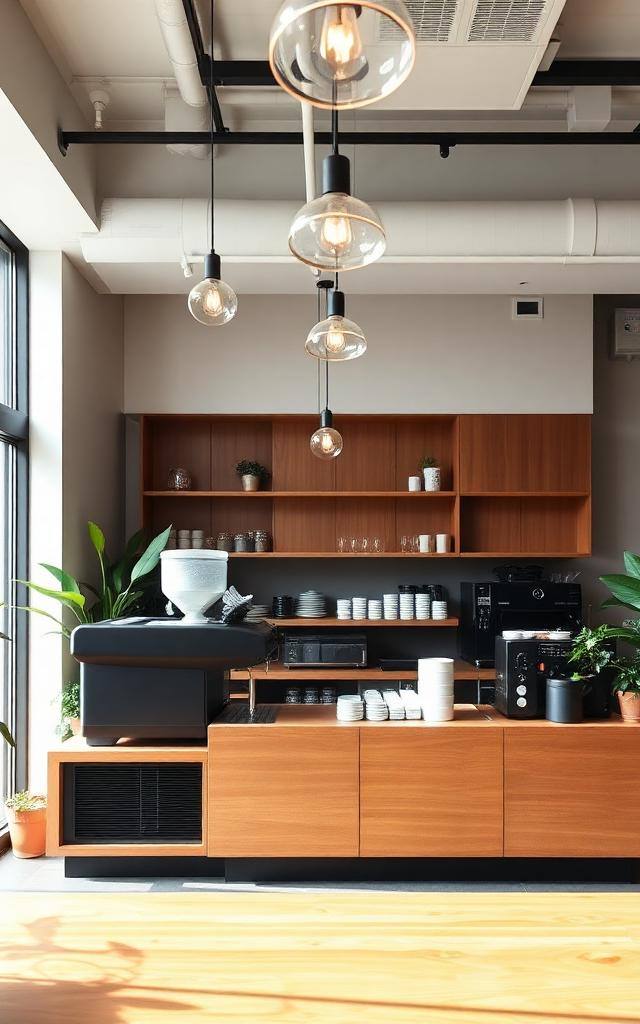
Third Culture Coffee
4.7A design-forward Downtown Bellevue café where a serious specialty-coffee program meets a signature matcha bar, global pastry case, and a plant-filled room built for slow mornings and long remote-work sessions.
Downtown
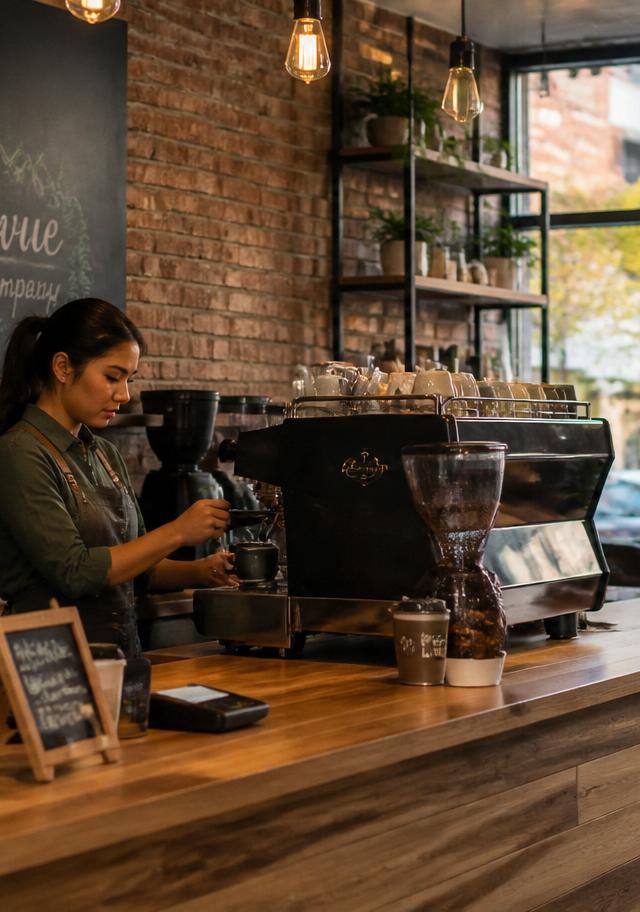
Caffe Ladro Bellevue
A downtown Bellevue outpost of the beloved Seattle-based, farm-direct specialty roaster — expertly pulled espresso, honest brewed coffee, and house-baked pastries a block from Bellevue Downtown Park.
Downtown

Belle Pastry
4.6French pastry case with espresso to match.
Old Bellevue

Main Street Coffee
4.5Local indie roaster on Main Street with a sunny patio.
Old Bellevue
Family Activities nearby
Browse all family activities in Bellevue →
Kelsey Creek Farm Park
Bellevue's 150-acre historic farm park — free admission, live barnyard animals daily, two 1930s-40s dairy barns, playground, and quiet wooded trails minutes from downtown.
Wilburton

Bellevue Downtown Park
A 21-acre urban oasis in the heart of Bellevue with a signature waterfall, half-mile promenade, great lawn, and inclusive playground.
Downtown

Snowflake Lane
Nightly holiday parade through The Bellevue Collection.
Downtown

Chism Beach Park
Wooded Lake Washington beach with lifeguards in summer.
Old Bellevue
Attractions nearby
Browse all attractions in Bellevue →
KidsQuest Children's Museum
4.6Downtown Bellevue's hands-on children's museum for ages 0–10 — 25+ STEAM exhibits, a two-story climber, a full water gallery, and daily programming, all a short walk from the light rail station.
Downtown
The Bellevue Collection
4.7Downtown Bellevue's three-building shopping, dining, entertainment, and hotel campus — Bellevue Square, Lincoln Square, and Bellevue Place connected by covered skybridges into one walkable destination.
Downtown
Bellevue Square
4.5The two-level, 200-store centerpiece of The Bellevue Collection — connected by sky bridge to Lincoln Square, Bellevue Place, and downtown Bellevue.
Downtown
Lincoln Square
4.5Downtown Bellevue's entertainment, dining, and lifestyle complement to Bellevue Square — cinema, chef-driven restaurants, a public plaza, and the W Bellevue, all under one covered roof.
Downtown
FAQ
Common questions
Editorial ratings
How we rate it
BellevueExplorer Editorial Ratings are our independent assessment of the visitor experience. Rather than measuring popularity, they highlight the strengths of each destination using consistent editorial criteria. They are separate from public review scores and are based on our published methodology.
Scenic beauty
The Perennial Border alone would earn five stars. Add the Yao Japanese Garden, the Ravine Experience suspension bridge, and 53 acres of considered planting, and this is the most beautiful free public garden in the Puget Sound region.
Family friendly
The Native Discovery Garden boardwalk, the wide paved loop, and clean accessible restrooms make this one of the easiest Bellevue outings with young children. No entry fee removes the pressure to stay longer than the kids want to.
Walkability
A mile-long paved main loop connects every major garden, with optional woodland trails for visitors who want more. The route is designed for wandering.
Photography
Few free public sites in Washington offer this variety of subject matter — formal border, Japanese garden, wetland boardwalk, suspension bridge, second-growth forest — all within a mile of each other.
Accessibility
The main paved loop is fully accessible with ADA parking and restrooms. The Ravine Experience trail is not — plan around it if mobility is a concern.
Value
Free admission, free parking, and world-class horticulture. It is difficult to overstate how unusual this combination is at this quality.
Relaxation
The Yao Japanese Garden and the wetland boardwalk of the Native Discovery Garden are as calm as any public space on the Eastside. Weekday mornings are close to meditative.
Hidden gem
Not exactly hidden — Garden d'Lights alone draws well over 100,000 visitors — but many first-time visitors to Bellevue never make it here, and mid-week visits still feel like a private tour.
Season by season
What each season brings
Rhododendrons and dogwoods peak in late April; the Perennial Border enters its first bloom by mid-May. Expect Pacific Northwest showers — pack a light rain layer even on sunny mornings.
The Perennial Border reaches full expression in July and August. The Fuchsia and Dahlia gardens follow. Long evenings, dry paths, and the coolest walk of the day is the Ravine Experience.
September brings warm color to the Yao Japanese Garden and deep saturation to the Dahlias. October fog off the ravine is a photographer's favorite. Leaf drop begins in late October.
Garden d'Lights runs from late November through early January with timed tickets. January and February are quiet, structural, and free of crowds; witch hazels and hellebores provide color.
Come prepared
Visitor checklist
- Comfortable walking shoes — the main loop is roughly a mile with the Ravine Experience adding another half mile of uneven trail
- A light rain layer any month of the year
- Water bottle — filling stations near the Visitor Center
- Camera or phone; a mid-range zoom is more useful than a wide angle for the Perennial Border
- Cash or card for the Trillium Store plant sale (seasonal and worth timing your visit around)
- Timed-entry tickets purchased in advance for Garden d'Lights (December sells out most weekends)
- Sun hat and sunscreen from May through September — the border is largely unshaded
- Leave pets at home; only service animals are permitted
Practical
Know before you go
The garden grounds are open every day from dawn until dusk. Admission is free. The Aaron Visitor Center is open daily 9am to 4pm, with reduced holiday hours. There are no advance reservations for a daytime visit.
Parking is free in the main lot off Main Street. It typically fills on summer weekends between 11am and 2pm; overflow is available at Wilburton Hill Park directly across Main Street with a short signed walk. There is no shuttle.
Pet dogs are not permitted anywhere on the grounds. Service animals are welcome. Drones are prohibited without a special permit. Bicycles and scooters must be walked. Do not remove plant material, seeds, or cuttings.
Garden d'Lights (late November through early January) is a separate ticketed event with timed entry. Purchase tickets online in advance; the display sells out most weekends and the on-site parking lot cannot accommodate walk-up demand. The Trillium Store and Visitor Center are open during d'Lights hours.
Weddings, private events, and commercial photography require an advance permit through the Bellevue Botanical Garden Society. The garden is a working horticultural collection; please stay on paths and do not touch the plantings.
Nearest amenities: Wilburton Hill Park across Main St (public restrooms and playground), and downtown Bellevue is a five-minute drive west for food and coffee.
Details
Hours & contact
Hours
- Garden grounds
- Daily, dawn to dusk
- Trillium Store
- Daily 10am-4pm
- Visitor Center
- Daily 9am-4pm (holiday hours vary)
- Garden d'Lights (late Nov - early Jan)
- 4:30pm-9:30pm
Contact
- Address
- 12001 Main St, Bellevue, WA 98005
- Phone
- +1-425-452-2750
- Website
- bellevuebotanical.org
More like this
Related parks & trails

Bridle Trails State Park
4.7About 480 acres of forest with horse and hiking trails, just north of Bellevue in Kirkland.
Nearby — Kirkland

Coal Creek Natural Area
4.7Mining-history trail through a forested ravine.
Newport
Mercer Slough Nature Park
4.7A 320-acre freshwater wetland preserve in the heart of Bellevue with seven miles of trails, boardwalks over open water, a working blueberry farm, and the Environmental Education Center run in partnership with Pacific Science Center.
Newport
Meydenbauer Bay Park
4.7Bellevue's downtown waterfront: a swim beach, a pier, and kayak rentals ten minutes below Old Bellevue.
Old Bellevue
Keep exploring
Continue your visit
Tags
Featured in
This place is featured in these collections
Perfect-day stop
Bellevue in One Day
A single, walkable day in Bellevue: coffee, a downtown park, a museum, a lakeside lunch, a botanical walk, and dinner — sequenced.
Free to visit
Free Things to Do in Bellevue
The Bellevue day that costs nothing but your walk: parks, gardens, farms, lakes, and the free floor of the art museum.
Weekend must-see
Bellevue Weekend Itinerary
The three-day Bellevue: Friday arrival dinner, a full Saturday, and a slower Sunday. Sequenced.
Parks & trails pick
Best Parks & Trails in Bellevue
The full Bellevue outdoors map: Downtown Park, Botanical Garden, Mercer Slough, Bridle Trails, and Coal Creek — sequenced by mood.
Contribute
Have great photos of Bellevue Botanical Garden?
Share them with BellevueExplorer. Editor-reviewed, no account required — we credit contributors when we publish.